
From survey to buildable design
Electric Spinach attends site, assesses the existing EV charging installation, documents what is already appropriately provided, identifies fire and electrical safety improvements, and gives the client a clear route from findings to remedial works and ongoing inspection.
What is an EV Fire Safety & Compliance Review?
The service is a site-specific assessment of existing EV charging infrastructure against relevant recommendations in RC59: Recommendations for fire safety when charging electric vehicles, applicable BS 7671 requirements and the information available for the property, including insurer requirements and the building fire strategy or fire-risk assessment.
The review considers the complete charging environment—not only whether the charger powers on. Electric Spinach records existing controls, identifies gaps and separates EV remedial works from matters requiring a competent fire-risk assessor, fire engineer, fire-alarm specialist or other appropriate professional.
Important Professional Boundary
Why RC59 Matters
RC59 was developed through RISCAuthority and published by the Fire Protection Association with insurer input. It gives practical guidance to insurers and their clients on fire hazards and control measures associated with charging electric vehicles in public, commercial, industrial and residential settings.
RC59 is influential insurer-led guidance, not a statutory certification scheme. It expressly recognises that individual insurers may impose different requirements and that its recommendations do not replace legal duties or competent professional advice. A credible review therefore applies the relevant recommendations to the actual site rather than claiming universal “RC59 compliance”.
Key RC59 Technical Considerations
RC59 area | What the recommendation addresses | How the review responds |
|---|---|---|
Fire-risk context | Location, intended use, charging while unoccupied or where people may be asleep, and passive, active and managerial controls. | Records the charging environment and identifies matters for the property fire-risk assessment or fire strategy. |
Electrical isolation | Safe isolation, prominent identification, accessibility for trained staff/firefighters, lockout and manual reset after power restoration. | Reviews the EV supply and isolation arrangement and identifies electrical or signage improvements. |
Fire-alarm interface | Isolation of charger supplies when the fire alarm operates, without charging restarting automatically when the alarm is silenced. | Checks the documented interface position; EV control work and fire-alarm integration are separated between competent specialists. |
Physical environment | Vehicle movement, combustible storage, cable exposure, ventilation, impact risk and suitability of the charging location. | Documents existing protection and identifies risk-based improvements rather than prescribing barriers automatically. |
Fire protection | Detection, suppression, compartmentation, firefighter access and water-runoff considerations, particularly in enclosed/basement locations. | Flags relevant matters for assessment by the fire-risk assessor, fire engineer or specialist system provider. |
What We Review Onsite
Six project stages
Charging Equipment
Condition, mounting, cables and installation environment
Electrical Supply
Distribution, circuit protection and applicable inspection needs
Isolation
Emergency access, identification, lockout and reset arrangements
Fire Interface
Documented shutdown requirements and existing controls
Physical Protection
Vehicle movement, impact exposure and cable risk
Management
Signage, user information, maintenance, records and fault response
Information That Strengthens the Review
Where available, the client should provide the current fire-risk assessment, fire strategy, insurer correspondence, EV electrical certificates and drawings, distribution schedules, charger asset list, maintenance records and details of the fire-alarm or suppression systems. Missing information is recorded rather than silently assumed.
Planning inputs assessed together
Existing Provision
Controls already supporting the EV safety strategy
Priority Actions
Items materially affecting electrical or fire-risk management
Recommended Improvements
Measures improving safety, identification or alignment with guidance
Risk-Based Considerations
Items requiring site-specific judgement rather than a universal answer
EV Remedial Scope
Works Electric Spinach can define, quote and deliver where appropriate
Specialist Actions
Fire-alarm, fire-engineering or other work requiring the relevant competent party
Electric Spinach Standard™
From Survey to Solution
1. Assess
Attend site and review the existing EV charging infrastructure
2. Report
Document existing controls, gaps, priorities and responsibilities
3. Remediate
Define and deliver EV-related works and coordinate specialist interfaces
4. Maintain
Move the installation into planned inspection, testing and records
A Residential Development
How the Review Works in Practice
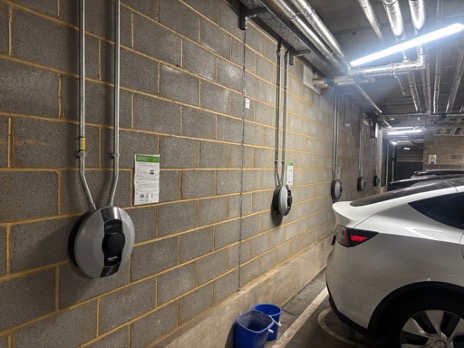
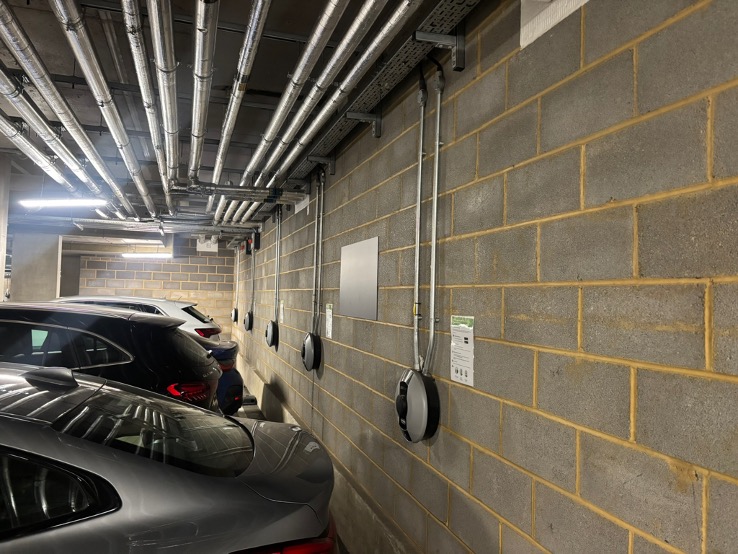
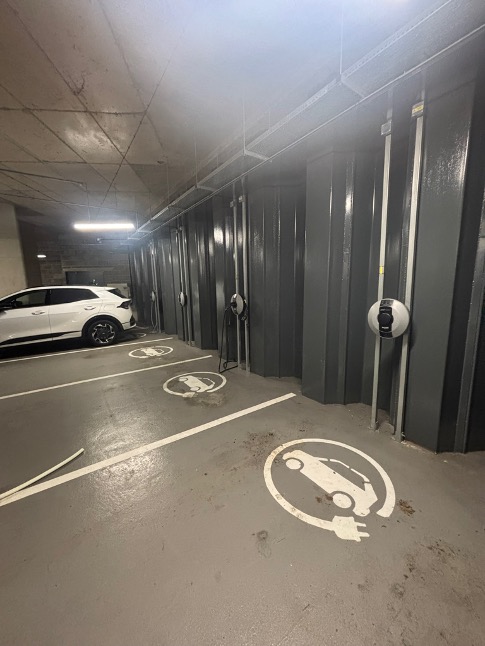
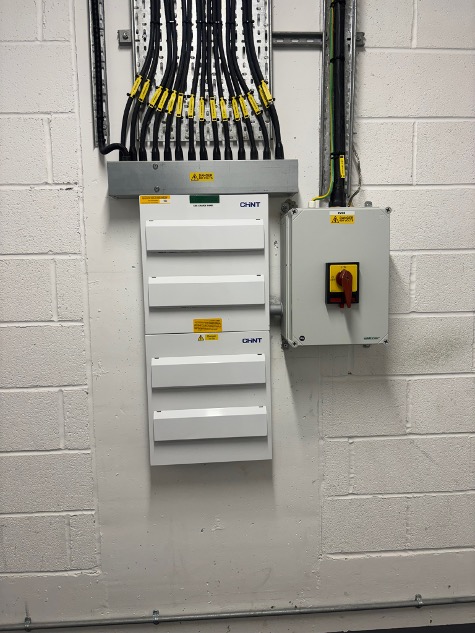
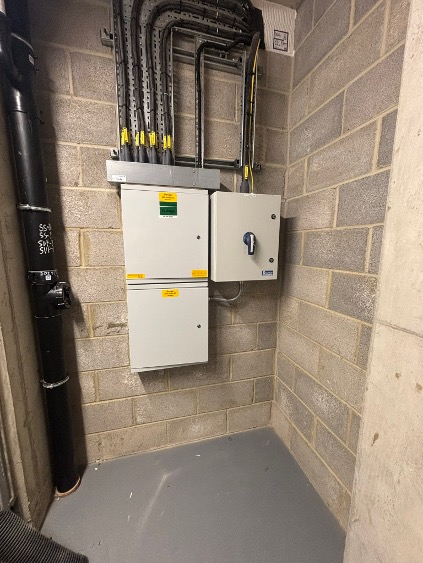
Electric Spinach attended a residential development to review the installed chargers, parking bays, electrical intake rooms, distribution arrangements, isolation facilities, signage and existing controls. The objective was to distinguish what could be retained from the measures requiring improvement—not to replace a functioning estate unnecessarily.
Infrastructure
42 existing Pod Point chargers
Environment
Two residential car parks
Electrical Supply
Three distribution boards
Objective
RC59-led review and action plan
What the Review Identified
Area reviewed | Finding | Outcome |
|---|---|---|
Electrical isolation | Final circuits already had means of isolation at distribution boards in the electrical intake rooms. | Retain existing provision. |
Isolation identification | EV identification was present, but clearer “EV Charging Isolation Point” wording would assist contractors and emergency responders. | Enhance signage. |
Fire-alarm shutdown | The chargers did not automatically disconnect when the building fire alarm operated. | Priority action: propose EV relay controls; final fire-alarm integration by the appointed fire specialist. |
Vehicle-impact protection | The Pod Point units were IK10 rated; wheel stops or barriers were not installed. | Risk-based decision rather than automatic prescription. |
User information | Instructions were present at some, but not all, charging points. | Provide consistent information across the estate. |
What is an EV Fire Safety & Compliance Review?
Electric Spinach
Assess the EV infrastructure; document findings; define EV controls, electrical works, signage and ongoing inspection within scope.
Client / Responsible Person
Provide fire strategy, risk assessment and insurer requirements; determine priorities and retain responsibility for statutory fire safety.
Competent fire specialist
Assess broader fire risk; design/modify/certify fire-alarm, detection, suppression or fire-engineering measures within their competence.
Applying The Electric Spinach Standard™
The Electric Spinach Standard™ connects the initial review to the long-term operating position. The service is designed to leave the client with more than a report: a prioritised action plan, defined ownership and a route into remedial works and continuing asset management.
Compliance
Electrical requirements, evidence and actions are documented
Uptime
Safe isolation and fault-response routes support controlled operation
Interoperability
EV controls are coordinated with building systems and specialist interfaces
Operational Visibility
Isolation points, assets, records and responsibilities become clearer
Lifecycle Management
Remediation leads into inspection, maintenance and periodic review
Who Is the Service For?
The review is particularly relevant to managing agents, residential and Build-to-Rent developments, landlords, asset managers, facilities teams, commercial offices, shopping centres, hotels, mixed-use developments and properties with covered or underground car parks.
Evidence base
- RC59: Recommendations for fire safety when charging electric vehicles, Version 1, published 2021 by the Fire Protection Association through RISCAuthority.
- The Regulatory Reform (Fire Safety) Order 2005 and the current fire-risk information applicable to the property.
- BS 7671 requirements applicable to the EV charging installation and the IET Code of Practice for Electric Vehicle Charging Equipment Installation.
- Relevant fire-alarm, detection, suppression and emergency-lighting standards only where assessed by the appropriately competent specialist.
- Manufacturer instructions, insurer requirements and site-specific operating and maintenance information.
Already have EV chargers?
Electric Spinach can assess your existing EV infrastructure against relevant RC59 recommendations and applicable electrical requirements, document the current position and establish a practical route through improvement works, specialist coordination and ongoing inspection.
Book your EV fire safety & compliance review