ELECTRIC SPINACH STANDARD™ SUCCESS STORY
Electric Spinach’s relationship with Get Living began at East Village, where ageing chargers were distributed across multiple residential plots. The first requirement was to understand the inherited infrastructure, decide what could be retained and establish a scalable approach to resident charging.
The relationship expanded across the wider Build-to-Rent portfolio. Electric Spinach has assessed existing third-party installations, replaced unsuitable legacy equipment, retained viable assets, commissioned chargers onto Fuuse, improved communications, introduced asset identification and provided inspection, maintenance, billing and reporting support.
The outcome is not one identical charger specification. It is a consistent framework for deciding what each property needs and bringing different buildings, manufacturers and generations of infrastructure under clearer operational control.
EV charging across a property portfolio should be managed as part of the asset-management strategy: consistent governance, clear responsibility, appropriate technology and long-term operational visibility.
The Electric Spinach Standard™ provides consistency without forcing identical hardware into every building. Each property is assessed against the same five operational principles, while the technical response reflects its users, electrical capacity, parking environment, connectivity, legacy assets and future demand.
At East Village, Get Living faced both an ageing charger estate and increasing resident demand. Electric Spinach looked beyond immediate hardware replacement to resident access, electrical infrastructure, connectivity, software, reporting, future expansion and post-installation responsibility.
Create a scalable EV charging strategy that could modernise inherited infrastructure, support residents and provide a repeatable framework for management across Get Living’s wider portfolio.
Project consideration | Why it mattered |
|---|---|
Different assets | Each property had its own hardware, electrical conditions, parking layout and history. |
Resident experience | Charging needed to be understandable, accessible and supported as part of the residential amenity. |
Legacy equipment | Existing assets required evidence-led decisions: retain, remediate, reconfigure or replace. |
Operational control | Software, tariffs, billing, faults, inspections and reporting required common governance. |
Future demand | The strategy needed to preserve economical options as residential EV adoption changes. |
The portfolio included ageing chargers requiring replacement, modern units suitable for retention, equipment needing software commissioning, unreliable communications and third-party installations requiring inspection and structured management. Standardisation therefore meant asking the same disciplined questions at every property—not specifying one product everywhere.
Get Living provides practical evidence of how landlords and managing agents can govern multi-site charging: understand the installed assets, establish responsibility, create software and records visibility, plan inspection and maintenance, and adapt the technical solution to residential constraints.
Residents, access models and long dwell times
Hardware, supply, capacity and condition
Basements, undercrofts and communications constraints
Software, billing, tariffs and fault ownership
Inspection, records and remedial follow-through
Expansion and eventual asset renewal
The Electric Spinach Standard™ created a common route from property assessment to ongoing management while allowing the intervention to change by site.
Resident needs, access and landlord objectives
Hardware, power, connectivity and constraints
Retain, remediate, reconfigure or replace
Hardware, Fuuse, access, billing and reporting
Inspect, test, commission and record
Monitor, maintain, support and review
The strongest portfolio standard is not a single charger model. It is a repeatable compliance, decision-making and management framework.
Property | Starting point | Electric Spinach response |
|---|---|---|
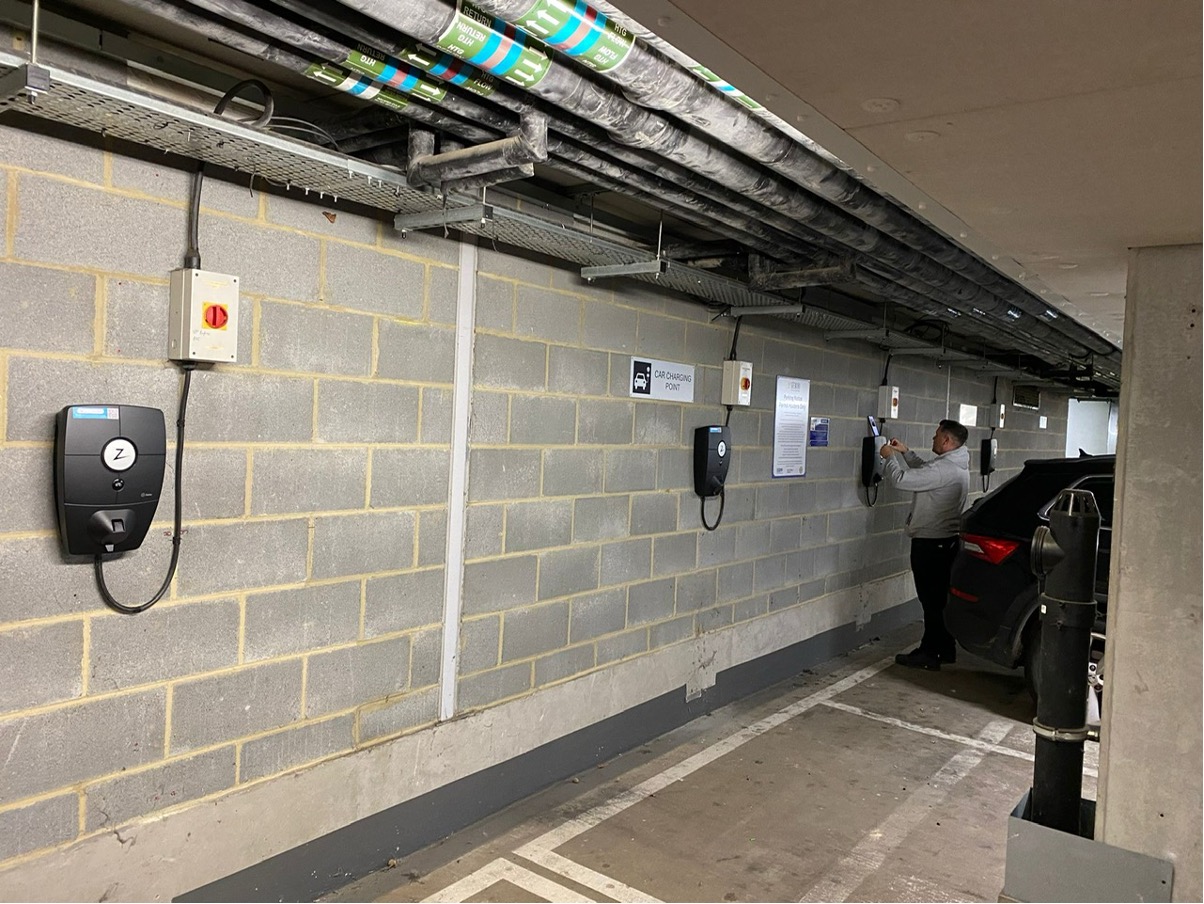
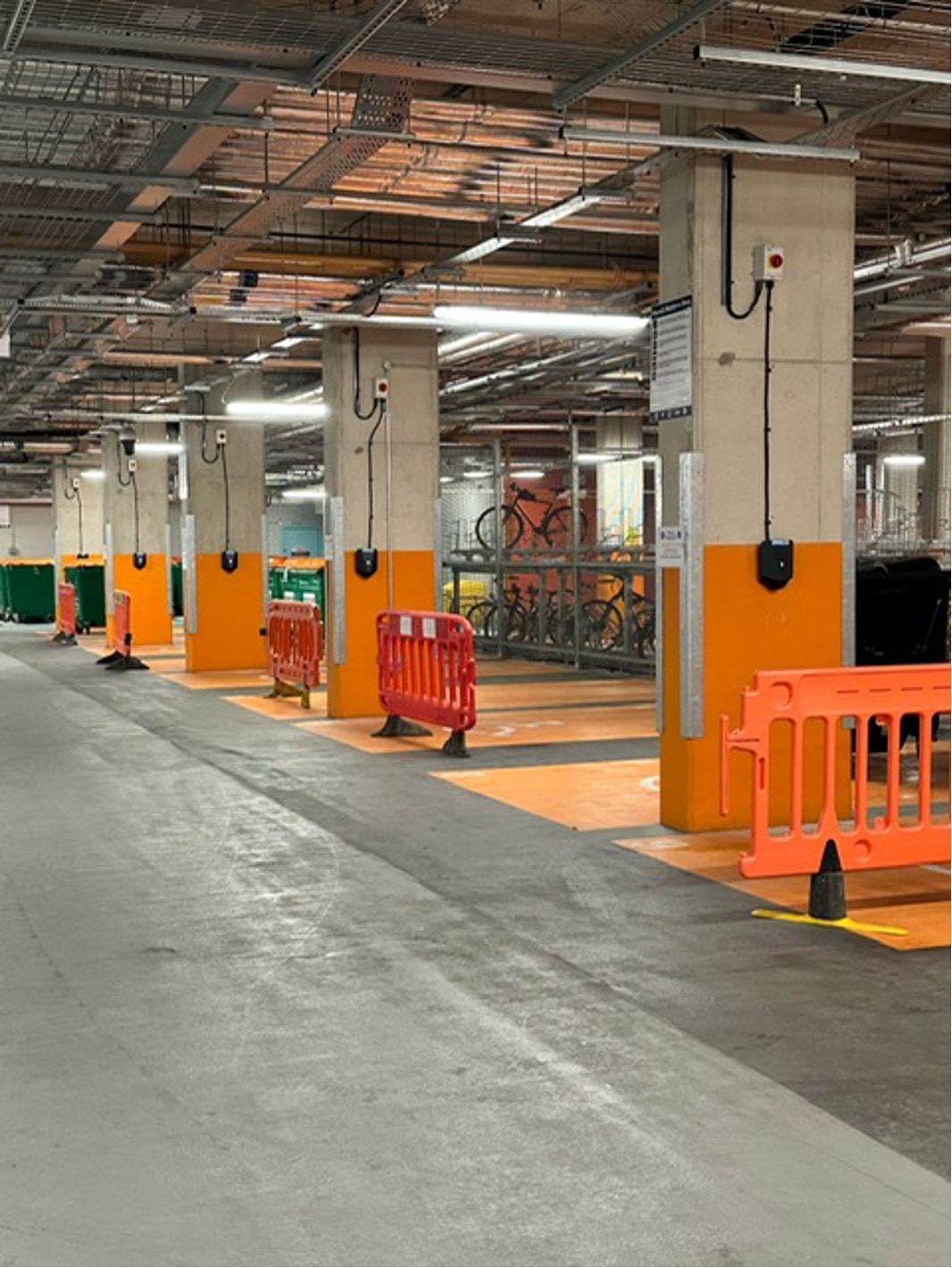
East Village, Stratford | 25 legacy Ensto chargers across 10 locations. | Proposed modern OCPP-capable hardware, reuse of viable infrastructure, intelligent load management, Fuuse and future expansion planning. |
No. 6 Portlands Place | Four Pod Point chargers and six three-pin Rolec units. | Replaced with 10 Easee chargers, reusing suitable infrastructure and aligning billing, reporting and management. |
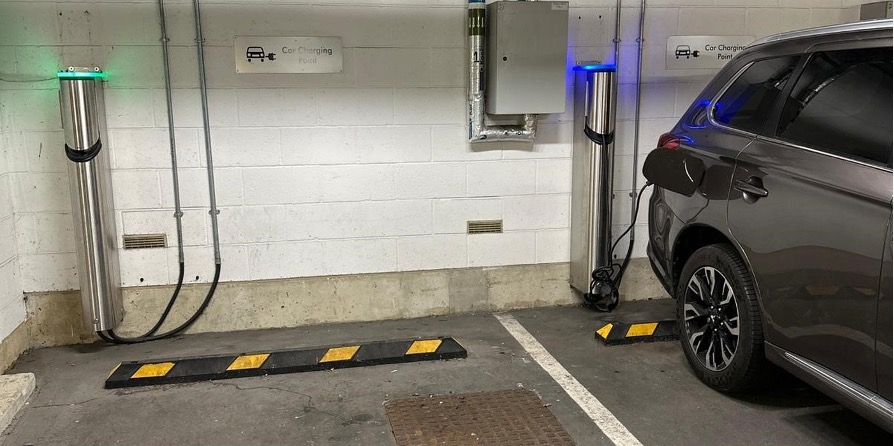
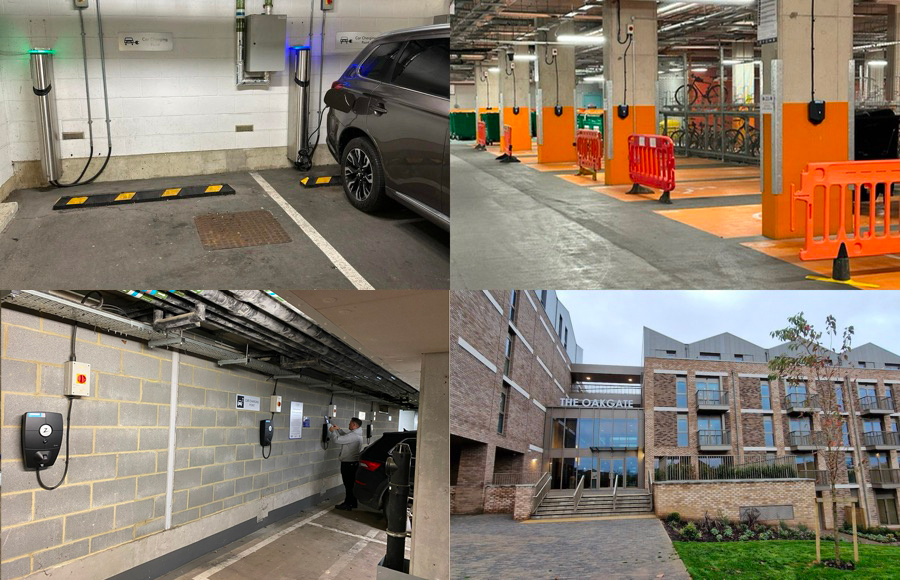
The Oakgate, Leatherhead | 24 existing ICS chargers. | Took on management and annual compliance; commissioned to Fuuse and resolved access and firmware issues with the relevant parties. |
Sherlock Quarter, Birmingham | Eight existing 7 kW Project EV APEX-7S chargers. | Introduced asset identification, verified Fuuse connectivity, completed inspection/testing and established ongoing support. |
The Landings, Maidenhead | Existing Rolec Securicharge estate. | Retained the hardware, improved communications through hardwired connections and added ongoing inspection and operational management. |
At The Landings, the chargers were retained but their communications needed improvement. Electric Spinach coordinated hardwired data connections rather than accepting weak wireless performance. Reliable communications support authorisation, billing, diagnostics, software updates, reporting and charger-status visibility.
At No. 6 Portlands Place, Electric Spinach returned to remedy the clarity of EV distribution-board and circuit identification. This modest intervention illustrates a wider lifecycle point: post-installation records and labels matter to the teams responsible for safe operation.
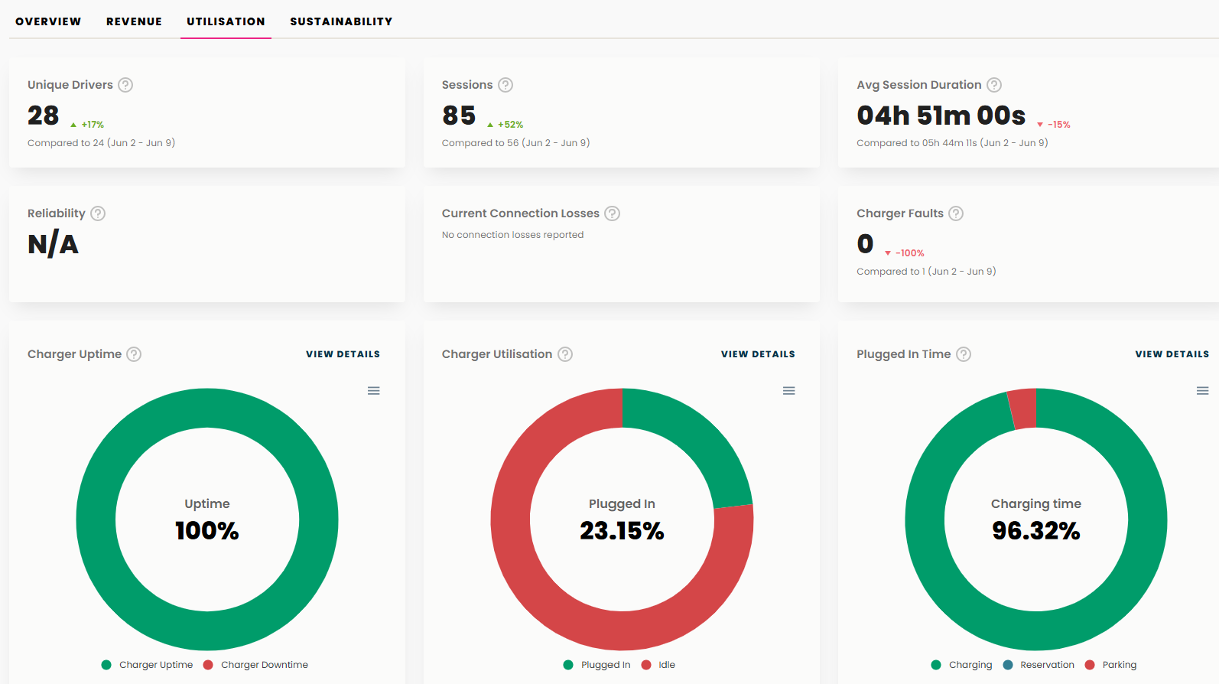
Across managed properties, Fuuse provides a common operational layer where technically appropriate, even when the underlying hardware differs. The wider framework combines annual inspection, remote diagnostics, fault escalation, preventative servicing, billing support, reporting, asset records and advice on expansion or replacement.
INSPECT
Annual inspection, electrical testing and records
MONITOR
Backend visibility, status and charging activity
SUPPORT
Diagnostics, firmware and on-site escalation
MAINTAIN
Preventative servicing and remedial follow-through
REPORT
Usage, billing and performance information
Get Living’s properties presented different technical problems: legacy replacement, mixed-estate standardisation, takeover of third-party chargers, connectivity improvement and ongoing compliance. Electric Spinach applied one consistent method to each—understand the asset, preserve what remains useful, remediate or replace where justified, create operational visibility and establish long-term responsibility.
The value is not that every Get Living property has the same charger. The value is that different assets, hardware and lifecycle stages are governed through The Electric Spinach Standard™.
The Electric Spinach Standard™ also expresses a wider stewardship principle: take responsibility across technical decisions, compliance, software, maintenance and long-term asset value.
Managed sites include inspection, testing, asset records and remedial follow-through
Connectivity, software, firmware and hardware faults enter a structured support route
Different manufacturers can sit within a coherent strategy, with Fuuse used where appropriate
Backend management, identification and reporting improve portfolio oversight
Retention, replacement, expansion, maintenance and renewal are considered together
A portfolio can contain different manufacturers while using common rules for compliance, software, reporting and escalation.
Connectivity, firmware, backend or component issues may be resolved without wholesale replacement.
Long dwell times and available power may matter more than maximum headline charging speed.
Reliable communications and asset records underpin billing, monitoring, faults and maintenance.
Create ownership, records, budgets, inspection and lifecycle planning across the portfolio.
Electricity at Work Regulations 1989 and BS 7671 requirements applicable to the electrical installations.
The IET Code of Practice for Electric Vehicle Charging Equipment Installation.
Manufacturer installation, commissioning, firmware and maintenance requirements for the relevant hardware.
Site-specific access, billing, connectivity, inspection, operational and asset-management requirements.
OCPP specifications as relevant to hardware/backend communication; no project-specific certification claim is made unless supported by the relevant product evidence.
Ownership extended beyond installation into software, billing, inspection, maintenance, reporting and lifecycle planning.
Common records, software visibility, inspection and escalation created consistency across different buildings and hardware.
The portfolio demonstrates real constraints around legacy equipment, connectivity, dwell time, power, resident access and future demand.
Electric Spinach helps landlords, Build-to-Rent operators and managing agents take control of EV infrastructure through The Electric Spinach Standard™—bringing together compliance, uptime, interoperability, operational visibility and lifecycle management.
Book an EV infrastructure review