ELECTRIC SPINACH STANDARD™ SUCCESS STORY
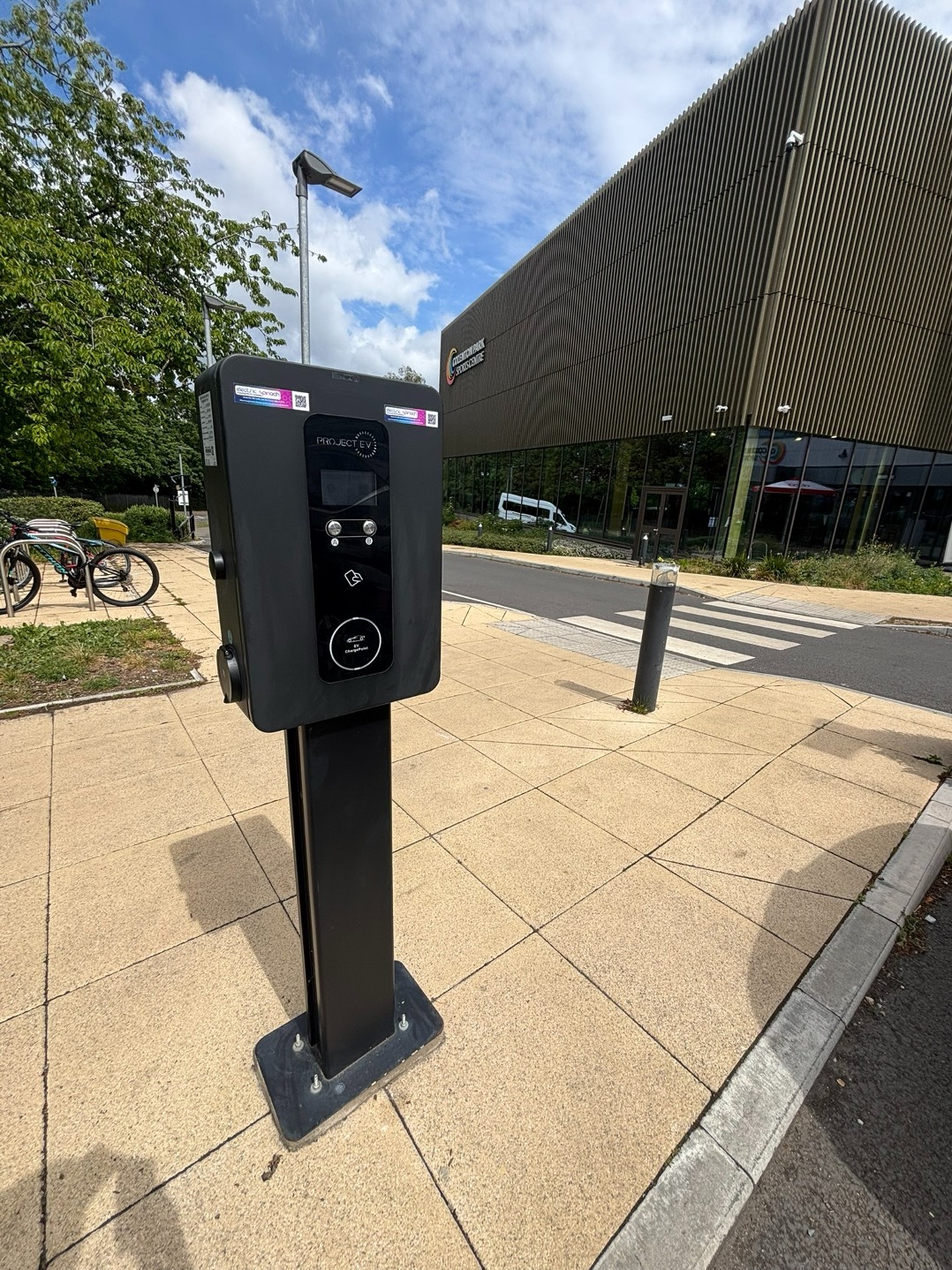
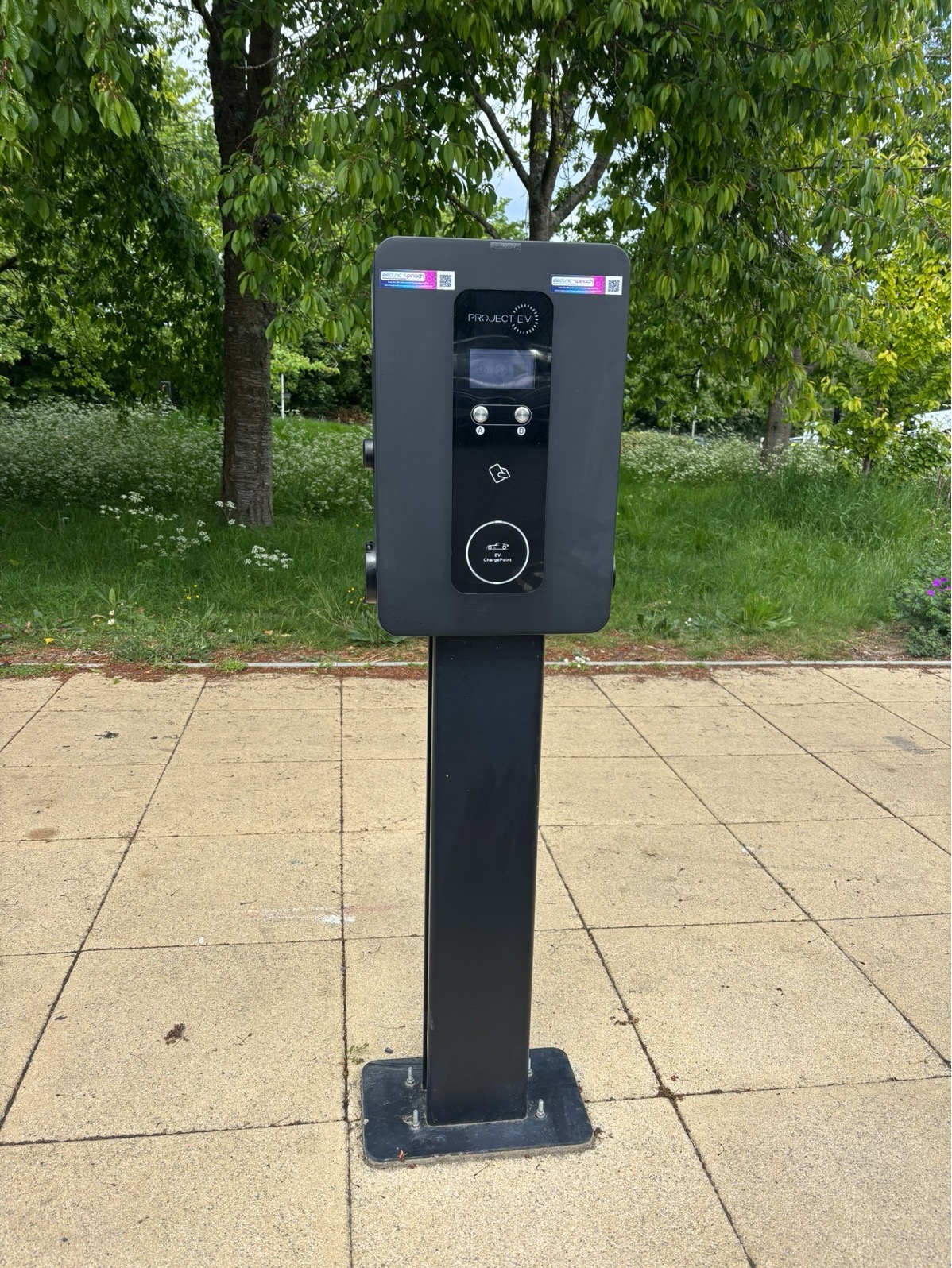
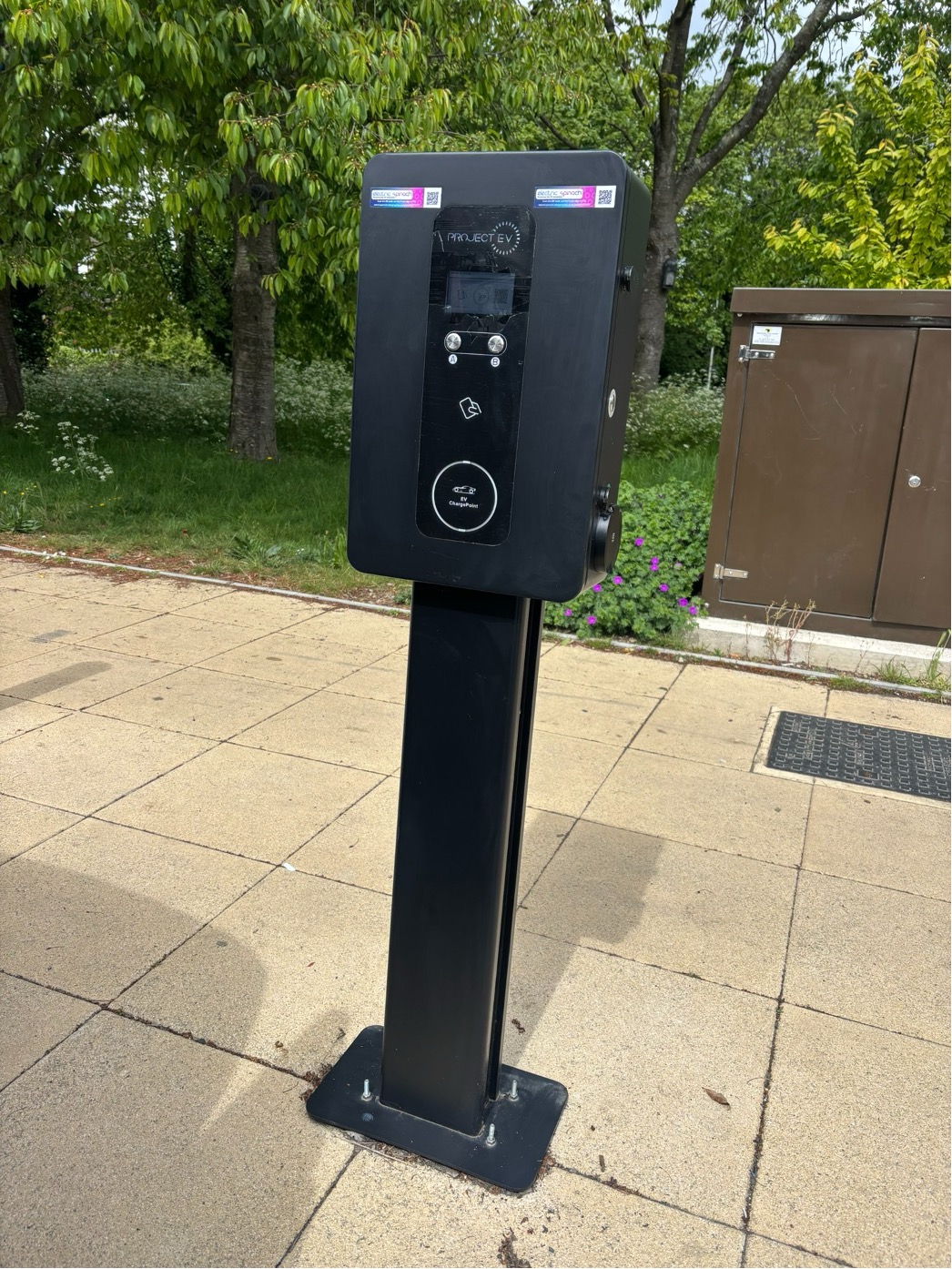
Cozenton Park Sports Centre had three dual Project EV charge points, providing six charging outlets as part of the completed new-build development. The hardware was installed, but the original contractor subsequently ceased trading and the site was left for approximately a year without the specialist support needed to take the service forward.
Electric Spinach began by establishing the condition and operational readiness of the inherited assets. Inspection and electrical testing found the charging system satisfactory overall, while identifying physical, connectivity and configuration matters requiring action. These included missing connector flaps, firmware and network configuration, the absence of a SIM in one unit and the need for clear asset identification.
The findings informed remedial works, software commissioning, public access and tariff arrangements, asset records and an ongoing management programme. Cozenton moved from installed equipment to an identifiable, connected, monitored and supported public charging service.
Installing EV chargers is a project. Operating them successfully is a long-term responsibility.
The Standard™ connected electrical condition with hardware, connectivity, software, public access, tariffs, payments, monitoring, maintenance and reporting. Its five principles defined the operational outcome; a six-stage process established the route from inherited infrastructure to active lifecycle management.
Medway Council already had the physical charging infrastructure. It needed a specialist operational framework covering inspection, connectivity, software, public access, tariffs, payments, monitoring, faults, maintenance and reporting.
Understand the inherited EV infrastructure and establish the technical, operational and commercial framework required to manage it as a dependable public charging service.
Project consideration | Why it mattered |
|---|---|
Responsibility | The original installer had ceased trading, leaving no clear specialist support route. |
Readiness | Electrically satisfactory equipment could still have connectivity, configuration or physical issues. |
Public access | Drivers needed a visible, straightforward service with an appropriate tariff and payment route. |
Asset control | Individual units needed to be identifiable for inspection, faults and remedial history. |
Continuity | Monitoring and planned maintenance were required beyond reactive user complaints. |
On 15 May 2026, Electric Spinach inspected and tested all three dual charging units. The electrical system and charge points were found to be in satisfactory condition. The wider operational review nevertheless identified matters requiring attention:
A charger can be electrically satisfactory while still requiring physical, connectivity, configuration or management attention.
Cozenton demonstrates why planned EV maintenance must cover the electrical installation and the operational system around it. Offline or unmanaged chargers require structured diagnosis across power, hardware, firmware, SIM connectivity and backend communication.
Electric Spinach converted the findings into a controlled remedial process. The middle unit required the correct Project EV SIM, commissioning and a firmware update. The identified remedial works were subsequently actioned.
Test the inherited electrical and charging assets
Record physical, connectivity and configuration gaps
Separate immediate work from improvement items
Repair components and restore required connectivity
Commission, update and confirm the operational position
Monitor, maintain, report and support the service
The inspection evidence did not support wholesale replacement.
Physical repairs, firmware, configuration and SIM connectivity were addressed individually.
QR labels and asset records connected each unit to its history and status.
The management plan introduced monitoring, diagnostics and preventative maintenance.
Fuuse became part of the site management environment, supporting charger visibility, charging activity, billing and performance reporting. For drivers, the objective was a charging service that could be found and used straightforwardly. For Medway Council, it was an operating environment with clearer oversight and administration.
Electric Spinach reviewed nearby public charging tariffs using Zapmap and helped Medway Council establish a locally informed price. Account and payment-remittance arrangements connected the user-facing service with the commercial administration behind it.
Requirement | Project response | Ongoing management |
|---|---|---|
Connectivity | Network configuration, firmware and SIM requirements reviewed. | Monitor communications and diagnose offline events. |
Public access | Charging environment commissioned for public use. | Maintain accurate user information and availability. |
Tariffs & payments | Local tariff benchmark and remittance arrangements supported. | Review pricing and payment administration. |
Reporting | Fuuse provides usage, billing and performance information. | Use evidence to guide service and investment decisions. |
Electric Spinach fitted QR identification labels and incorporated the chargers into asset records and Fuuse. This allows faults, inspection history, servicing and remedial actions to be associated with the correct equipment rather than an undefined “charger in the car park”.
You cannot effectively manage infrastructure if you cannot clearly identify the assets you are managing.
The ongoing scope combines manufacturer updates, proactive usage monitoring, remote diagnostics, fault alerts, on-site investigation, repairs, wear-and-tear reporting, preventative servicing, cleaning, billing support and performance reporting.
MONITOR
Usage, status and manufacturer alerts
DIAGNOSE
Remote support and structured fault investigation
INTERVENE
On-site repair and remedial action where required
MAINTAIN
Preventative servicing, cleaning and condition review
REPORT
Usage, billing and charger-performance visibility
The three dual chargers did not need wholesale replacement. Electric Spinach established their condition, addressed specific physical and connectivity gaps, commissioned the management environment, supported public pricing and payments, introduced asset identification and created an ongoing inspection, monitoring and maintenance framework.
Medway Council now has a clearer operational position and better visibility of how the six charging outlets are being used and supported.
Together, these measures reflect the Standard’s wider stewardship principle: take responsibility for the complete service and protect the long-term value of viable infrastructure.
All three dual units were inspected and tested; improvement items were recorded and progressed
Connectivity, firmware, SIM and hardware matters entered a structured support process
Existing Project EV hardware was retained and connected with the Fuuse environment
QR identification, asset records and Fuuse reporting improved control
Preventative maintenance, diagnostics, remedial action and reporting became ongoing
Define responsibility for software, tariffs, inspection, faults, revenue and user support.
Power at the charger does not confirm connectivity, configuration, payment or management readiness.
Firmware, SIMs, configuration or individual components may be the real constraint.
Findings require ownership, prioritisation, remediation and verification.
Hardware, compliance, connectivity, software, payments and maintenance are interconnected.
Electric Spinach Annual Management Report and charger test sheets dated 15 May 2026.
Cozenton remedial work quotation dated 22 May 2026 and confirmation that the works were subsequently actioned.
Electricity at Work Regulations 1989; BS 7671 requirements applicable to the installation; and the IET Code of Practice for Electric Vehicle Charging Equipment Installation.
Project EV manufacturer technical and maintenance requirements.
Public Charge Point Regulations 2023 where applicable to the service, and Zapmap as the tariff-benchmarking reference.
Specialist responsibility continued beyond construction handover across inspection, software, connectivity, faults and support.
At least, one times per year. The planned inspection and preventative-maintenance programme replaced reliance on reactive repair alone.
Connectivity, SIM configuration, firmware, backend communication and hardware were diagnosed before replacement was considered.
Electric Spinach helps local authorities, property owners, managing agents and facilities teams take control of existing charging infrastructure through the Electric Spinach Standard™—bringing together compliance, maintenance, connectivity, software, commercial management and long-term support.
Book an EV infrastructure review